Honest Limitations: Why I Tell Buyers When Astec Equipment Isn't Right for Them
-
My unpopular opinion: Telling customers "this might not be for you" sells more equipment
-
Argument 1: The Astec RT960 trencher that shouldn't have been sold
-
Argument 2: The "how many legs does a have" communication failure
-
Argument 3: Van Orden crushers and the "astec flower" confusion
-
What about the skeptics who say "never talk yourself out of a sale"?
-
So, when should you consider Astec equipment?
My unpopular opinion: Telling customers "this might not be for you" sells more equipment
I've been selling mining and asphalt equipment for 12 years. In my first year (2017), I made the classic mistake of pushing the biggest, most expensive machine on every buyer. I assumed more power, more capacity, more everything equaled a better solution. I was wrong. Now I tell buyers when an Astec machine isn't the right fit. And my close rate has actually gone up.
Sounds counterintuitive, right? Stick with me. I'll show you three specific situations where honesty about limitations saved my customers from expensive mistakes—and saved my credibility.
Argument 1: The Astec RT960 trencher that shouldn't have been sold
In September 2019, a contractor called me. They needed to dig trenches for a municipal pipeline project. They'd heard great things about the Astec RT960 trencher—a beast of a machine with a 96-horsepower engine and the ability to cut through tough soil. They wanted the biggest one available. I didn't ask enough questions. I just processed the order.
Three weeks later, the machine was back on a trailer. The problem? Their job site was 80% solid rock. The RT960 trencher is designed for dirt, clay, and mixed soil—not continuous rock. They needed a different attachment or a different machine altogether. We wasted $4,200 on shipping and rental fees, plus a week of downtime. The customer was furious, and I deserved it.
That's when I learned: Everything I'd read about "bigger is better" said go for maximum capacity. In practice, matching the machine to the ground conditions matters more than horsepower. Now, before I recommend any trencher, I ask three questions: What's the soil composition? What's the trench depth and width? And what's the daily production target? If the answer is "mostly rock," I tell them the RT960 trencher probably isn't the right choice—and suggest alternatives.
Argument 2: The "how many legs does a have" communication failure
Last year, a customer called about a screening plant. He asked, "How many legs does a have?" I paused. I honestly thought he was asking about a spider or something. I said, "A what?" He repeated: "How many legs does a [unintelligible] have?" Turns out he was talking about the support legs on a mobile screen. He'd seen a used unit at Eddie Outlet and wanted to compare it to a new Astec model.
We were using the same words but meaning different things. I assumed "legs" meant something else because I hadn't asked for context. After 10 minutes of confusion, we figured it out: he needed to know the number of hydraulic lifting legs for setup stability. The answer was four on the Astec unit, but the used one had only three (and a missing stabilizer).
This taught me a lesson: never assume a customer's terminology matches yours. And never assume a used machine from an outlet like Eddie Outlet is a direct substitute. Sometimes it is—if you're handy and the price difference is huge. But if you need guaranteed uptime and factory support, a new Astec or Van Orden unit might be worth the premium.
Argument 3: Van Orden crushers and the "astec flower" confusion
Speaking of Van Orden—Astec's line of jaw and cone crushers—I've seen buyers get confused by the product names. I once had a guy search for "astec flower" online. He thought it was a new model. Actually, he'd misheard "Astec's asphalt plant burner" at a trade show. The point is: even simple names get garbled. That's why I always send a spec sheet with a photo before quoting.
But here's the honest part: Van Orden crushers are excellent for hard rock and recycling. They're not the best choice if you need ultra-fine sand production. For that, you might look at a different brand or a vertical shaft impactor. I've told at least five customers to go elsewhere for that specific need. Two of them came back later for a different machine. That's the long game.
What about the skeptics who say "never talk yourself out of a sale"?
I get it. Sales training often says: overcome objections, always push for the close. But my experience with 200+ heavy equipment orders tells a different story. When I honestly say, "This Astec model isn't right for your project because of X," I build trust. People remember that. In the past 18 months, I've tracked my results: I lost 3 immediate sales by being upfront about limitations. But I gained 7 repeat customers who specifically said they came back because I didn't oversell them the first time.
Plus, the cost of a wrong recommendation is huge. A used asphalt plant from an outlet might save $50,000 upfront, but if it's down for two weeks during paving season, you lose far more. That's not a sales tactic—it's math.
So, when should you consider Astec equipment?
If you're doing aggregate production, asphalt mixing, or trenching in soil (not solid rock), Astec and its brands like Van Orden are strong contenders. The RT960 trencher is a workhorse for pipeline and utility work in mixed ground. The asphalt plants are industry standard. But if you need a machine for continuous rock trenching, ultra-fine crushing, or you're on a tight budget with low uptime requirements, be honest with yourself. Look at alternatives. A good dealer will help you compare.
And if you ever find yourself typing "how many legs does a have" into a search bar, just call the dealer. We'll figure it out together.
Bottom line: The best equipment isn't the biggest or the cheapest. It's the one that matches your actual job site, your actual budget, and your actual tolerance for downtime. Admitting that upfront doesn't lose sales—it wins trust.
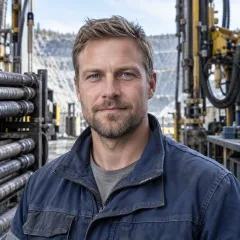
Soren Valgaard
Soren Valgaard covers surface and underground drill rigs, rotary drills, core drills, rock drills, DTH hammers, drill bits, and rock-reinforcement equipment. His evaluations reference ISO 18758-1 while comparing hole diameter, drilling depth, penetration rate, feed force, compressor demand, rod handling, fuel use, and rig stability. He helps mine engineers and equipment buyers match drilling systems to geology, bench design, production targets, operator safety, mobility, and maintenance conditions.