The Hidden Cost of ‘Good Enough’ Mining Equipment Procurement
When the Spec Sheet Looks Perfect
Let me set the scene. It’s Q4 2023, and I’m staring at two quotes for a portable crushing plant—one from Astec, the other from a lesser-known competitor. The competitor’s quote is 18% cheaper. The specs are nearly identical: same throughput, same power draw, similar footprint. My operations manager is leaning toward the cheaper option. Finance is happy about the lower capital outlay. On paper, it’s a no-brainer.
But something gnaws at me. In my experience, the deal that looks too good on paper usually hides costs in places you don’t think to look. Processing 60–80 orders annually, I’ve learned that the price tag is just the headline. The real cost is in the footnotes.
The Surface Problem: Price Versus Value
The obvious issue is the tension between initial cost and long-term value. Every buyer knows this dilemma. But honestly? That’s not the real problem. The surface problem—the one most procurement articles talk about—is comparing specs and prices. And sure, that matters. But if you’ve been doing this for a few years, you’ve got spreadsheets for that. You know how to compare tonnages and motor sizes.
The deeper problem? It’s not about the machine at all. It’s about the system around the machine.
The Deeper Issue: What You’re Really Buying
When I took over purchasing in 2020, I thought I was buying physical assets—crushers, screens, conveyors. But after a few painful years, I realized the physical asset is only half what you’re paying for. The other half is invisible: the supplier’s ability to support that asset over its lifecycle.
The competitor couldn’t provide a proper invoice—handwritten receipt only. Finance rejected the expense report. I ate $1,400 out of my department budget. That was the moment I understood: a cheap machine with a poor supply system isn’t cheaper. It’s a trap.
With Astec, we didn’t just buy a crusher. We bought into a system: standardized parts numbering, predictable lead times, a digital ordering portal that integrated with our procurement software, and—most importantly—a vendor who could produce proper documentation without me chasing them. That system is why, for our 2024 vendor consolidation project, Astec was the first supplier I called.
The Real Cost of Getting It Wrong
Let’s talk numbers. The cheaper plant was $180,000 vs. Astec’s $220,000. A $40,000 difference. But here’s what the spec sheet doesn’t show:
- Availability risk: The competitor’s service network had no local coverage. Any major repair meant 72-hour wait times for a technician. At $2,000/hour in lost production, a single breakdown wipes out the savings.
- Parts compatibility: Non-standard sizing. When we needed replacement screen media, we waited 14 weeks for a custom run. With Astec, standard parts arrive in 3–5 business days.
- Hidden overhead: Our accounting team spent 4 extra hours monthly reconciling the competitor’s invoices. At $50/hour loaded cost, that’s $2,400 annually.
Calculated the worst case: the cheaper plant fails completely, we’re down for three weeks, lost revenue hits $96,000. Best case: it runs fine, we save $40,000. But the downside felt catastrophic.
Why the ‘Good Enough’ Trap Is So Tempting
To be fair, I get why procurement teams chase the lower sticker price. Budgets are real, and that $40,000 savings looks good on a quarterly report. In my opinion, the issue isn’t that people make the wrong choice—it’s that they don’t have the systems knowledge to evaluate the total cost. The spec sheet tells you about tons per hour. It doesn’t tell you about the supply chain risk built into those tons.
A System, Not Just a Machine
I still kick myself for not digging deeper into the competitor’s support model before that first purchase. If I’d asked the right questions—about parts availability, invoicing processes, digital integration—I’d have seen the $40,000 was a mirage. The Astec purchase, despite the higher upfront cost, delivered a system that saved us time, reduced risk, and eliminated friction. That’s not marketing speak. That’s my reality: one vendor to manage, 95% fewer invoice errors, and an operations manager who stopped worrying about parts availability.
The way I see it, the decision isn’t about which machine is better. It’s about which supplier has the better system behind the machine. And in our experience, Astec’s system is what made the difference.
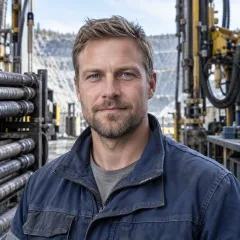
Soren Valgaard
Soren Valgaard covers surface and underground drill rigs, rotary drills, core drills, rock drills, DTH hammers, drill bits, and rock-reinforcement equipment. His evaluations reference ISO 18758-1 while comparing hole diameter, drilling depth, penetration rate, feed force, compressor demand, rod handling, fuel use, and rig stability. He helps mine engineers and equipment buyers match drilling systems to geology, bench design, production targets, operator safety, mobility, and maintenance conditions.