What Is the Divide in Heavy Equipment? It's Not the One Everyone Thinks
I coordinate emergency parts and service for asphalt plants and crushing spreads. That means I take the calls nobody wants: the Saturday bearing failure, the screen deck that gives out mid-week, the burner that won't light when there's a haul truck waiting to load. I've been doing this for eleven years, and in that time I've processed hundreds of rush orders, rerouted field technicians, paid my share of overnight freight invoices, and learned a few hard lessons about who gets fast help in this industry and who gets left waiting.
So when someone asks me what is the divide in this business, I don't hesitate. The divide is between customers who get rapid attention and customers who get told to wait. And the uncomfortable part is that it usually has very little to do with the size of the customer's operation. It has to do with the vendor's attitude.
The Divide Is Not What Most People Think
The conventional story is that large quarries and big paving contractors get priority because they generate more revenue. Small producers — the family-run crushing operation, the rural asphalt plant — are supposed to accept longer lead times and slower responses as the price of being small. People nod along with this. It sounds like business.
I think it's mostly backwards. Big customers don't get good service because they're big. They get good service because they've learned to demand it. They have equipment managers who know how to escalate, maintenance histories, parts lists, and a track record of holding vendors accountable. They've been disappointed enough times that they built systems to prevent it.
(Worth pausing on: the "divide" isn't a law of economics. It's a habit. And habits can be changed.)
A small operator, by contrast, often doesn't know what to ask for. He calls, explains the problem, and trusts the vendor. If the vendor says "we'll get back to you," he waits. When the part finally arrives, he's grateful — even though it arrived a week late. The resentment comes later, quietly, in the form of a negative review or a decision to try somebody else next time.
I remember an analogy the veteran who trained me used: the patient who knows how to describe symptoms clearly gets seen faster than the one who just says "I'm sick." Same condition, same severity, different outcome. It's not fair. It's the system. And the divide in equipment support works the same way.
A Screen Deck in Missouri
In March 2024, a small producer called about a failed screen deck. He ran a single 200-ton-per-hour crushing spread: two screens, one cone, one jaw. The replacement deck was in stock at the factory. Standard shipping was nine days. His contract with the state road department had a weather-dependent deadline, and nine days meant missing the window completely.
We went back and forth for about an hour — the freight cost was real, and his margins weren't the kind that absorb surprise costs. In the end, we paid $1,400 in overnight shipping and found a field technician willing to reroute his Friday route. The deck was replaced before Saturday morning. The freight was almost triple what standard shipping would have cost. But the alternative was losing a $140,000 production window. The math wasn't hard.
Here's what people misunderstand about small operators: downtime doesn't scale. Two weeks of downtime for a large contractor is a setback in one quarter. For a small producer, it can be the difference between a profitable year and a lost one. Their entire business is built around a narrow window of good weather and reliable equipment.
Astec Industries, Astec Active, and the Limits of Technology
I work with Astec Industries Inc. equipment every day — asphalt plants, crushers, screens, roof coating systems, and the rest of the industrial machinery lineup. Astec's reputation rests on heavy iron, and deservedly so. But the machines are only half the story. The other half is how the parts and service network around those machines behaves.
Technology has narrowed the divide in some ways. Astec Active, when it's used well, gives a plant operator real-time visibility into machine health. I've seen it flag a temperature reading that didn't look right on a dryer burner. The operator dismissed it at first — an alert, another annoyance — until the burner control confirmed a failing probe. The fix happened during scheduled maintenance instead of during an unplanned shutdown. Dodged a bullet.
But I'd be overstating it if I said telematics solve the divide. They don't. Astec Active is a tool, not a service culture. A connected machine with a distracted owner is still vulnerable. The best monitoring system in the world doesn't matter if the person on the other end treats a small account like a nuisance.
The Eddie Outlet Call
Last spring, a customer called about a faulty electrical outlet on a dryer control panel. Not a bearing failure. Not a cracked screen. An outlet — a $40 part, the kind of thing you'd expect to be a thirty-minute fix.
Our lead technician, Eddie, drove two hours to look at it.
Eddie. Outlet. Two small words that don't sound like a big deal until you consider the context. The customer had been told by his previous supplier that he was "not a priority" because his account was small. An intermittent power loss inside a dryer burner's control panel is trivial in theory and terrifying in practice. That week it cost him nothing. It could have cost him a full day of production.
Eddie replaced the outlet, tested the circuit, and spent another forty minutes walking the plant looking for anything else that didn't feel right. He found a worn vibration isolator on the discharge chute and swapped it out before it became a problem. That visit built more trust than any sales presentation we've ever given. That operator has bought two pieces of equipment from us since, and he'll tell you the reason is how we answered a small call on a Friday afternoon.
The lesson I keep coming back to: attention is the differentiator. It's what turns a service call into a relationship.
The Objection I Always Get
"Of course larger customers get priority. They generate more revenue. It's not discrimination — it's business."
Let me address that.
- First, the cost of treating small customers with respect is surprisingly low. A four-hour response window doesn't require helicopters and a dedicated parts department. It requires a phone system, a small inventory cache, and a culture that doesn't say vague things like "we'll get back to you" and then disappear. The marginal cost of telling a small operator the truth about a delivery window — even when the truth is "we can't quote until Tuesday" — is close to zero.
- Second, the industry as a whole pays for the divide. When a small operation sits idle for an extra week, aggregate supply tightens. Asphalt prices creep up. Road work falls behind. The large contractors who "earned" their priority end up absorbing the cost anyway — it just arrives as delayed materials and higher bids, not as a service invoice.
- Third, today's small operator is tomorrow's major account. This pattern has played out more times than I can count. The producer who was treated well on a $200 parts order is the one who calls when he's ready to buy a multi-million-dollar plant. Vendors who saved thirty dollars by ignoring a small request gave up an opportunity measured in six figures.
The Henry Contract
Henry runs one asphalt plant and a small paving crew. A while back, he asked us to quote a service agreement. It was small, nowhere near what the major producers spend. But he had one condition: a four-hour response window for emergency parts. His previous vendor laughed and said 48 hours was the industry standard.
Henry's logic was straightforward. His plant had a ten-day window to produce mix for a county paving project. If a part failed, four hours versus 48 hours could decide whether he met that window or lost it. He wasn't asking for a discount. He was asking for a commitment.
We signed the contract, and honestly, in year one it barely covered its costs. But the next year, Henry added a second piece of equipment. This year, he's planning to expand his crew and buy another plant. All of those purchasing decisions have come to us first.
Looking back, I almost made the mistake of dismissing the Henry contract as a small customer being overly demanding. If I had, I'd have lost him — not to a competitor, but to the exact attitude that keeps the divide in place.
So What Is the Divide?
It's not output tonnage. It's not the gap between a 200-ton crusher and a 600-ton one. It's not even the difference between a plant with Astec Active telematics and a plant running on paper records and a sharpie. Those differences are real, but they're not the fundamental thing.
The divide is between vendors who are genuinely curious about a customer's problem and vendors who are watching the clock. Between an emergency that gets a plan and an emergency that gets a ticket. Between "we'll fit you in" and "we're on our way."
Not every customer will grow into a major account. But every customer is somebody's Henry — somebody's reason to keep the doors open, make payroll, and finish the job before the weather turns. Small doesn't mean unimportant. It means potential. And potential, if you give it proper attention, tends to become the biggest account you have.
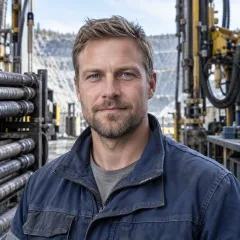
Soren Valgaard
Soren Valgaard covers surface and underground drill rigs, rotary drills, core drills, rock drills, DTH hammers, drill bits, and rock-reinforcement equipment. His evaluations reference ISO 18758-1 while comparing hole diameter, drilling depth, penetration rate, feed force, compressor demand, rod handling, fuel use, and rig stability. He helps mine engineers and equipment buyers match drilling systems to geology, bench design, production targets, operator safety, mobility, and maintenance conditions.