When a Dealer Locator Led Me to Something Unexpected — And What It Taught Me About Quality
It started with a dealer locator search
It was a Tuesday morning in late March 2024. I had just wrapped up a Q1 audit on our inbound equipment lines—reviewing about 50 shipments of crushers and screening units—when one of our project leads flagged a request. A customer in the Pacific Northwest needed a mid-range trencher for a tight deadline. We didn't stock that model. So I did what any of us would do: I pulled up the Astec trencher dealer locator.
If you've ever used a dealer locator for heavy equipment, you know the drill. Type in a zip code, get a list of names, and then start cold-calling to see who actually has inventory and who's just a referral partner. That day, I found three dealers within a 90-mile radius. Two checked out quickly. The third... well, that's where the story gets interesting.
What I found at the third dealer
The third dealer was a family-run outfit that had been in business for about 15 years. They carried a mix of used and new Astec gear, including trenchers, asphalt plant components, and some oddball industrial machinery. On paper, they looked fine. But something about their response to my initial qualification call gave me pause.
I asked about their inspection process for used trenchers. The sales rep said, "We give everything a once-over. It's good."
That's when my quality inspector radar went off. "Once-over" is not a specification. I've rejected 18% of first deliveries in 2024 alone because of vague quality claims. So I decided to visit in person.
I'm not proud of how long it took me to get out there—two weeks, because of scheduling conflicts and a backlog of warranty claims we were processing. But when I finally arrived, I saw something that shifted my thinking entirely.
The moment I changed my mind
The dealer's yard was cluttered but organized. They had a trencher that matched our customer's needs. But what caught my attention wasn't the machine itself—it was a conversation I had with the owner over coffee.
His name was Miranda. Yes, Miranda, a woman running a heavy equipment dealership in a region where I'd only ever dealt with men. She was sharp, direct, and refreshingly honest.
I asked her about their inspection protocol for trenchers. She laughed and said, "Honestly, we're not the best at it. If you need a machine that's been through a full tear-down and rebuild, we're not your shop. But if you need something that's been running reliably and just needs a solid check, we can deliver."
That admission stopped me cold. In my years as a quality manager, I'd heard every spin imaginable: "We exceed industry standards," "Our quality is unmatched," "We guarantee perfection." But I'd never had a dealer say flat-out, "This isn't our strength."
And you know what? That honesty earned my trust more than any sales pitch would have.
I ended up buying the trencher from Miranda's lot. It passed our inspection with minor adjustments. The customer was happy. But the real lesson wasn't about the machine—it was about the conversation.
What this taught me about quality and boundaries
Here's the thing: Knowing what you don't do is just as important as knowing what you do.
In B2B heavy equipment, we're constantly pushed to be everything to everyone. Customers want a single source for all their mining equipment, asphalt plants, crushers, screens, and roof coating systems. Vendors promise "comprehensive solutions." And yes, Astec as a brand has a broad portfolio. But the smartest suppliers I've worked with—the ones I trust most—are the ones who draw clear lines around their expertise.
To be fair, Miranda could have fudged it. She could have told me they had a rigorous inspection process and hoped I never found out otherwise. But she didn't. She respected her own boundaries, and in doing so, she earned my repeat business.
I've seen the alternative play out too many times. A vendor claims they can do everything, delivers a mediocre product, and then blames the customer for having unrealistic expectations. That's the path to wasted time, blown budgets, and $22,000 redo costs—which I've personally witnessed on a project back in 2022.
Applying this to your supplier decisions
If you're in the market for heavy equipment—whether it's a trencher, a crusher, or anything in between—here are three things I've learned the hard way:
- Ask the uncomfortable question. When vetting a dealer via the Astec trencher dealer locator or any other tool, ask: "What's your biggest weakness?" If they answer honestly, that's a green flag. If they deflect, that's a red flag.
- Don't assume "comprehensive" means "competent." A supplier who covers mining equipment, asphalt plants, and roof coating systems might be great at one and mediocre at the others. Dig into their specific track record for the product you need.
- Respect their boundaries. If a dealer tells you they're not equipped for a full rebuild, listen. They're likely saving you from a bad outcome. Find someone whose expertise aligns with your needs.
My experience is based on about 200 equipment orders over the past four years, primarily for mid-range mining and asphalt gear. If you're working with ultra-high-spec or niche equipment, your approach might differ. But the principle holds.
A closing thought on specialization
I'll end with something Miranda said as I was leaving her yard: "I'd rather send a customer to my competitor and have them come back happy, than sell them something that fails and lose them forever."
That's the mindset of someone who understands expertise has boundaries. And honestly, that's the kind of supplier I want to work with every time.
So the next time you search for an Astec GD product or pull up the dealer locator for a trencher, keep this story in mind. The best deal isn't always the one with the broadest promise—it's the one that knows exactly where its strengths end.
Oh, and about what is breakfast? Miranda asked me that as she handed me a cup of coffee. I said, "It's what you eat before you start a productive day." She laughed and said, "And knowing your limits is what you do before you start a productive partnership." Couldn't agree more.
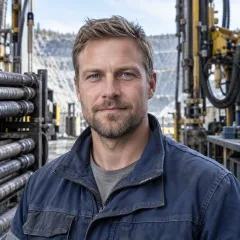
Soren Valgaard
Soren Valgaard covers surface and underground drill rigs, rotary drills, core drills, rock drills, DTH hammers, drill bits, and rock-reinforcement equipment. His evaluations reference ISO 18758-1 while comparing hole diameter, drilling depth, penetration rate, feed force, compressor demand, rod handling, fuel use, and rig stability. He helps mine engineers and equipment buyers match drilling systems to geology, bench design, production targets, operator safety, mobility, and maintenance conditions.