When Henry Contract Was Hungry for Tonnage: A 48-Hour Astec Repair
Friday, 4:47 p.m.
Henry Contract called when most people were already planning their weekend. Their operator told me the Astec dryer drum made 'a noise that makes you stop and listen, and not in a good way.' Then it stopped turning. Completely. If you have ever stood next to an asphalt plant when the drum goes quiet, you know that silence is worse than the noise. Honestly, the silence is even worse on a Friday afternoon, when the week should be winding down.
I'm a product support coordinator at an Astec heavy equipment dealer. I've handled something like 300+ rush service calls in 11 years, including same-day turnarounds, weekend rebuilds, and more than one 'we need this before the inspector shows up' request. Henry Contract is a road construction outfit we've worked with since 2019. They aren't the customer who calls every week. When they call, it matters.
Their contract had a 2,400-ton asphalt base scope, a Monday 7:00 a.m. paving window, and a liquidated damages clause that would have made a bad miss expensive. I'm not an attorney, but I've read enough penalty clauses to say that the mildest phrase in them is 'time is of the essence.'
When I first started doing emergency service calls, I assumed every breakdown had one clean reason. Part wears out. Replace it. Done. I don't think that anymore. This job taught me that the most expensive part in any repair is the assumption you don't verify.
What the fault code didn't say
The operator read me the VFD display: overcurrent. My first reaction was to order a dryer drum drive bearing. I actually said the words: 'It's probably the bearing.' Then I asked a question I didn't use to ask: 'What changed before the fault?' He thought for a second. 'Wednesday. We switched from virgin aggregate to RAP.'
RAP is reclaimed asphalt pavement. It includes old asphalt binder that can get sticky if the temperature drifts. Too much buildup behind the dryer flights changes the drum's load and makes the drive draw high current. The fault code said overcurrent. The operator's memory said 'look inside before you throw parts at it.' We pulled a mechanic off another job and had him at the plant by 6:10.
We had two competing stories. The operator's story said RAP buildup. My part history said bearing failures happen often enough. The thing that swayed me was his exact phrase: 'It didn't gradually get loud. It changed on Wednesday.' A failing bearing gives you warning. A sudden change after changing feed material points to load, not wear. That was the moment I stopped looking for the easy part number.
While the mechanic was driving over, the loader operator was doing that thing loader operators do: checking his tires and muttering. He said something I still quote: 'The best tires in the world don't mean anything if the plant is down.' He was right. We had a set of 26.5R25s waiting for that loader — basically the best tires you can put on it. But the bottleneck was not tires. It was a drum full of RAP buildup.
The fix, and the temptation to overpromise
The mechanic confirmed what we suspected: no bearing failure. The drum was loaded with built-up material. The fix was not a new part. It was cool down, get inside, remove the buildup from the flights, inspect the drum shell, then reheat slowly. The Astec design helped. Split dryer shell access made the job faster than it would have been on some other plants, and the service manual listed the torque specs for every flight segment. Note to self: always ask for the manual before you order parts.
But there was another layer. The VFD needed attention from someone who actually knows variable frequency drives. I can read a basic wiring diagram and I know which breaker feeds which motor, but I am not a control systems engineer. If you need a drive re-tuned, you want a different person. So we called in an electrical controls contractor, got the Astec tech support line on a conference call, and let them own that piece.
It would have been easy to tell Henry Contract 'we handle everything.' That would have been a comfortable lie. Honestly, it would have been a costly lie. After 300+ rush service calls, I've come to believe that 'we can handle everything' is the phrase I trust the least. The best service teams know their edge and use it.
The save
By Saturday evening, the drum was clear. By Sunday afternoon, we ran a test batch and measured discharge temperature at 305°F. According to the Asphalt Institute's MS-2 manual (asphaltinstitute.org), hot mix asphalt is typically produced between 285°F and 340°F, depending on the binder grade. Our target for that mix was 305°F.
The first truck loaded at 5:00 a.m. Monday. Henry Contract poured their base by 10:30 and finished well before the county inspector's 1:00 p.m. visit. We didn't just hit the window. We had time to spare. By the time the first truck rolled, the whole crew was hungry for tonnage, and they got it.
Three things I would keep
- Ask for the operator's story before ordering any part. The fault code gave me a direction. The operator's memory gave me the map.
- Split the work. Mechanical stayed with our crew. Electrical went to the controls specialist. Trying to do both would have made us slower in both.
- Use the first hour to protect the next 47. The fastest way to look like an efficient emergency service is to start with a thoughtful diagnosis instead of a rushed part order.
I know the last point is uncomfortable to sell. In a business where the customer asks 'can you fix it today?', the answer 'I need ninety minutes to understand it before I promise you a time' feels weaker than 'yes, we'll be there right now.' But I've learned that it's the only honest answer.
One more note on search terms, because search is weird. If you landed here looking for Astec Charter School Elementary or Astec Consumer Power Product Inc., this is not that Astec. That Astec is a school. That Astec does consumer power products. This Astec builds asphalt plants, crushers, screens, and other heavy industrial equipment. I can't speak for the school or the consumer products company. From my seat on the equipment side, I can tell you this: the most valuable thing a service operation can do is admit what it doesn't do.
Henry Contract needed a plant that would run on Monday. They got that. But I also needed a team that would say 'this part is my zone' and 'this part is yours.' That boundary is not a weakness. It's what made the save possible.
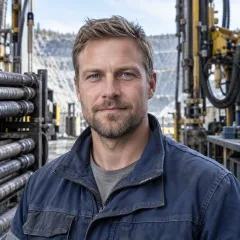
Soren Valgaard
Soren Valgaard covers surface and underground drill rigs, rotary drills, core drills, rock drills, DTH hammers, drill bits, and rock-reinforcement equipment. His evaluations reference ISO 18758-1 while comparing hole diameter, drilling depth, penetration rate, feed force, compressor demand, rod handling, fuel use, and rig stability. He helps mine engineers and equipment buyers match drilling systems to geology, bench design, production targets, operator safety, mobility, and maintenance conditions.