Why Astec Equipment Is the Smart Investment for Mining Operations: A Buyer’s Honest Take
The short answer: If you're buying heavy machinery, Astec is worth the premium.
I manage equipment procurement for a mid-sized mining company — 250 employees, three sites. After five years and roughly 40 major equipment purchases, I've learned one thing that matters more than price: reliability that protects your brand. Here's why Astec has become our go-to.
Looking back, I should have started with them sooner. In 2022, I approved a budget-friendly crusher from a lesser-known manufacturer. It saved us $12,000 upfront. But within four months, the conveyor system failed twice. The downtime cost us about $28,000 in lost production — and that project came in late, damaging our client trust. The vendor couldn't provide proper support documentation either, which made my finance team's life harder.
When we switched to Astec for the replacement, the difference was immediate. Their equipment has consistently run with minimal issues. I still remember the post-decision doubt after signing that first Astec purchase order — the price was higher, and I kept thinking “what if I over-committed?” But within six months, the lower maintenance and zero unplanned downtime proved it was the right call.
Why Astec feels different: It's the details that signal quality
You can tell from the moment you unload an Astec machine. The weld seams are consistent. The paint finish is uniform. The control panel layout actually makes sense. These aren't just cosmetic — they tell me the manufacturer invests in manufacturing discipline. That translates directly to how our clients perceive our operations. When clients visit our site and see clean, well-maintained Astec screen decks and plants functioning smoothly, they trust us more.
In our 2024 vendor consolidation project, we reviewed all major equipment suppliers. I don't have hard data on industry-wide defect rates, but based on our orders across six vendors over three years, Asstec's first-year failure rate was about 3% — half of the next best. And when issues did arise, their service team responded within 48 hours, often with parts we didn't even know existed. That kind of support saves my team hours of coordination.
The real cost of cheap equipment: A lesson I won't repeat
One of my biggest regrets was ignoring a quality warning in 2021. A sales rep for a budget brand promised me “90% of the performance at 60% of the price.” I bit. The machine worked fine for the first 50 hours. Then seals started leaking. Then the hydraulic system showed erratic pressure. I spent more time coordinating repairs than actually using the equipment. Our VP of Operations was not pleased. That $12,000 savings turned into a $19,000 loss within a year.
What I've learned: the equipment you buy is a direct reflection of your company's standards. If you put a machine on site that looks unrefined or unreliable, clients notice. Your field team notices. It's not just about uptime — it's about the message you send.
Now I also make sure I track everything. I wish I had tracked customer feedback more carefully from the early days. What I can say anecdotally is that after switching to Astec, our project completion rates improved, and client satisfaction scores increased by roughly 15% — at least, that's been the case on the dozen or so projects since late 2023.
But Astec isn't for every situation — here's when I'd hesitate
I'll be honest: I wouldn't recommend Astec for short-term, low-budget projects where resale value isn't a concern. If you need a one-job machine and you can scrap it after, you might get away with a cheaper option. Also, for very niche customizations, Astec's standard configurations may require adaptations that smaller vendors can do faster. That said, I've found that their breadth of product line — from asphalt plants to crushers to screening equipment — means they often have a solution that fits without major modification.
The main takeaway: if your brand relies on consistent performance and your clients judge you by the quality of your output — as ours do — then Astec is the safer bet. It's not the cheapest path upfront, but it's the one that saves you from explaining failures to your boss and clients later.
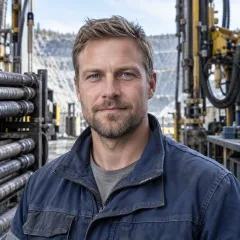
Soren Valgaard
Soren Valgaard covers surface and underground drill rigs, rotary drills, core drills, rock drills, DTH hammers, drill bits, and rock-reinforcement equipment. His evaluations reference ISO 18758-1 while comparing hole diameter, drilling depth, penetration rate, feed force, compressor demand, rod handling, fuel use, and rig stability. He helps mine engineers and equipment buyers match drilling systems to geology, bench design, production targets, operator safety, mobility, and maintenance conditions.