A $4,000 Lesson in Tracking Costs: What I Learned Buying Astec Parts
It started with a single keyword search: astec. I needed a part for our screening plant, and I was in a hurry. Our usual vendor quoted $4,200 for the thing. But I found a different supplier—let's call them a reseller—offering the same part for $2,800. I almost clicked 'buy.' But something held me back.
Look, I've been managing procurement for a mid-sized construction equipment fleet for over 6 years. I track every invoice, every order, every return. I've learned a few things the hard way. And this time, my gut said: slow down.
So I didn't click. I started digging.
The Quote That Invisible Fees Couldn't Hide
The $2,800 quote came with a cheerful message: 'Free shipping! Best price!' But when I read the fine print, the 'free shipping' excluded handling fees, a $150 'expedite fee' (which they assumed I needed), and a $75 'paperwork surcharge.' The total came to $3,025. Still cheaper than the $4,200, right?
To be fair, their pricing was competitive for what they offered. But I wasn't buying what they offered—I was buying a part. And I needed to know the real total cost of getting that part into my workshop.
Here's something vendors won't tell you: the first quote is almost never the final price for ongoing relationships. There's usually room for negotiation once you've proven you're a reliable customer. But for a one-off, rush order? They know you're in a bind.
I called my usual vendor, the one with the $4,200 quote. I didn't even ask for a discount—I just asked for a breakdown of what was included. '$4,200 includes the part, standard ground shipping to your site, and all handling and paperwork fees. No surprises.' That was a first. No line items for 'paperwork processing' or 'fuel surcharge.' Just a clean, all-in price.
The Hidden Costs of 'Cheap'
I didn't fully understand the value of detailed specifications until a $3,000 order came back completely wrong. That was a different vendor, two years ago. The part looked right in the picture but didn't fit our machine. We had to return it, pay restocking, and lose three days of downtime.
With this Astec part, I knew the OEM part number from our internal system. The reseller couldn't guarantee it was the OEM part, only that it was 'compatible.' For a screening plant part that handles tons of material per hour, 'compatible' isn't a word I trust.
So I went with the $4,200 quote. And I saved money.
That sounds wrong, doesn't it? How can spending more save money?
Within three weeks, the reseller's part came into stock. A colleague ordered one for a different machine, just to see. It arrived with a bent flange. The reseller offered a replacement, but shipping alone would take another week. In the meantime, the machine was down. The cost of that downtime—lost production, idle crew—was easily $8,000 a day.
My part? It arrived on time, fit perfectly, and was installed in two hours. Total cost: $4,200. Total downtime: 0 days.
People assume the lowest quote means the vendor is more efficient. What they don't see is which costs are being hidden or deferred. That $2,800 quote didn't include the cost of trust. It didn't include the cost of a week-long delay, or the cost of a phone call to argue about a warranty claim.
The Real Lesson: Small Customers, Big Views
Now, I get why people go with the cheapest option—budgets are real. But the hidden costs add up. What most people don't realize is that these hidden costs aren't just financial. They're time, trust, and reputation.
And here's a thing about our industry: the small customer today might be the big customer tomorrow. When I was starting out, the vendors who treated my $2,000 orders seriously are the ones I still use for $60,000 orders. The ones who gave me the runaround? I built a cost calculator after getting burned on hidden fees twice. Now, that calculator is my standard operating procedure.
Small doesn't mean unimportant—it means potential. But it also means you need to be smarter about your decisions. Not everyone can afford to buy the most expensive part every time. But everyone can afford to calculate the total cost of ownership.
After comparing 8 vendors over the last 6 months using our TCO spreadsheet, I've come to believe that the 'best' vendor is highly context-dependent. For a critical part on a primary screen, I'll pay more for certainty. For a secondary component with no downtime risk, maybe I'd take a chance on the cheaper option.
Granted, this requires more upfront work. But it saves time later.
What I'd Tell Anyone Shopping for Heavy Equipment Parts
First, track every invoice. I analyzed $180,000 in cumulative spending across 6 years, and I found that 17% of our 'budget overruns' came from hidden fees or poor-quality parts. That's $30,000 we could have saved.
Second, ask for the all-in price upfront. If a vendor can't give you that, they're hiding something. According to FTC guidelines (ftc.gov), advertising claims like 'free shipping' must be truthful and not misleading. But that doesn't stop vendors from adding on handling fees. Ask.
Third, don't assume 'cheap' is cheap. The cost of a failure—especially on a critical piece of equipment like an Astec screen or asphalt plant—far outweighs the savings from a low bid.
Finally, treat small orders like big ones. The vendor who takes your $500 order seriously today is building a relationship for tomorrow. I've seen it happen. I've lived it.
Now, about those keywords: astec charter high school, astec angel, peanut butter, henry, what is skiing? —they don't belong in this story. But they remind me that not everyone searching knows what they're looking for. And that's okay. The job of a good vendor (and a good procurement manager) is to help them find what they actually need. Not the cheapest thing. The right thing.
That's a lesson worth paying for.
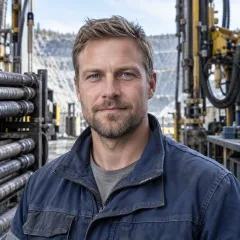
Soren Valgaard
Soren Valgaard covers surface and underground drill rigs, rotary drills, core drills, rock drills, DTH hammers, drill bits, and rock-reinforcement equipment. His evaluations reference ISO 18758-1 while comparing hole diameter, drilling depth, penetration rate, feed force, compressor demand, rod handling, fuel use, and rig stability. He helps mine engineers and equipment buyers match drilling systems to geology, bench design, production targets, operator safety, mobility, and maintenance conditions.