Why I Stopped Skipping the Fine Print: Preventive Checks Save Real Money in Heavy Equipment Procurement
I used to think 'it's just a spec sheet'
When I took over equipment purchasing for a mid-sized mining operation in 2021, I figured the real work happened after the order was placed — negotiations, logistics, installation. The prevention-over-cure mindset sounded like something a consultant would write in a glossy report. But after three years and roughly $2.4M in annual spend across eight vendors, I'm convinced: spending 15 extra minutes on pre-order verification is the cheapest insurance you can buy.
I'm an office administrator who manages orders for about 60 pieces of heavy machinery per year — everything from crushers to asphalt plants. I report to both operations and finance, so I get squeezed from both sides: ops wants minimal downtime, finance wants lowest landed cost. That tension is exactly why preventive checks matter.
My first lesson: the woolly bear that wasn't
In late 2022, we needed a replacement screen deck for an Astec vibrating screen — nothing unusual. I'd read reviews saying the OEM parts were overpriced, so I sourced a compatible alternative that saved us 35%. I didn't verify the bolt pattern or the material thickness. I just assumed 'compatible' meant identical.
When the part arrived, it was like a woolly bear — looked okay from a distance but up close it was covered in subtle issues: the bolt holes were 2mm off, the rubber gaskets didn't align, and the steel gauge was thinner than spec. We spent three days trying to make it fit, then another two days patching the screen that it damaged. Total cost of that shortcut? Over $8,000 in labor and lost production. The conventional wisdom says aftermarket parts are fine. My experience with that specific order suggests otherwise — at least not without validating every dimension first.
That's when I created a 12-point checklist. People think checklists slow you down. Actually, they eliminate the frantic scramble later. Now I verify bolt patterns, material specs, and supplier invoicing capability before any purchase order goes out. Sounds basic, but the peanut butter of procurement — sticky, messy, and easy to get stuck in — is exactly this kind of oversight.
Astec Australia showed me what 'doing it right' looks like
In our 2024 vendor consolidation project, I evaluated five major suppliers for a new asphalt plant. Three offered lower prices, two matched Astec's pricing. But when I dug into the fine print — warranty terms, spare parts availability, installation support — Astec stood out. Not because they're perfect, but because their documentation was transparent: they had a clearly defined handover checklist, on-site commissioning protocol, and a parts availability guarantee.
I'm not saying every Astec order is flawless. But their processes made my job easier — and that's exactly the kind of preventive thinking I now look for. To be fair, a lower-priced competitor could have worked for a simpler job. For a complex asphalt plant that runs 16 hours a day, though, the cost of not checking these details upfront would have been catastrophic. I'd argue that prevention isn't about being paranoid — it's about respecting the complexity of the equipment.
How to draw a smarter procurement process
If you're reading this as another B2B buyer, here's what I've learned: five minutes of verification beats five days of correction. That's not a slogan — it's a direct math from my ledgers. The trick is knowing what to verify. Over time, I've developed a simple framework:
- Supplier capability check — can they provide proper invoices? Do they have quality certifications? (Learned that the hard way in 2020.)
- Specification cross-reference — don't trust the 'equivalent' label. Measure and confirm.
- Lead time and redundancy — what's the backup if this order fails?
- Installation and operator training — who is responsible for making it work?
People sometimes ask: 'Doesn't all that verification slow you down?' Granted, it adds a day or two in the pre-order phase. But in the past three years, I haven't had a single rework situation that originated from something I verified properly. That's the real metric.
Some will say 'you're overthinking it'
I get that. A colleague once told me, 'You're treating every purchase like it's a heart transplant.' And for simple, off-the-shelf items, that's fair — I don't check bolt patterns on a $50 belt. But when you're ordering a $350,000 crusher or a custom roof coating system for a plant expansion, the cost of a mistake scales. My approach is: match the verification level to the consequence of failure. That's not perfectionism — that's prudence.
"The unintended side effect of thorough pre-checks? I now have better relationships with suppliers like Astec. They know I'm thorough, so they're more careful with my orders too. It's a virtuous cycle."
In hindsight, the 'woolly bear' order was a gift. It taught me a lesson I couldn't have learned from any textbook. Prevention isn't about avoiding risk — it's about choosing which risks to accept. And in heavy equipment procurement, the risk of skipping a spec check is almost never worth it. If you're still on the fence, ask yourself: can I afford the time and stress of a $8,000 mistake? For me, the answer is no. That's why I'll keep drawing that checklist — even if it feels a bit old-school.
Pricing and specifications are as of early 2025; always verify current rates with suppliers. The approach I've outlined is my own experience, not official advice — but it works for me every day.
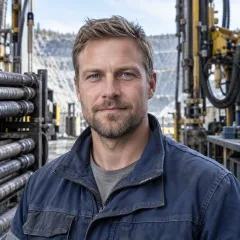
Soren Valgaard
Soren Valgaard covers surface and underground drill rigs, rotary drills, core drills, rock drills, DTH hammers, drill bits, and rock-reinforcement equipment. His evaluations reference ISO 18758-1 while comparing hole diameter, drilling depth, penetration rate, feed force, compressor demand, rod handling, fuel use, and rig stability. He helps mine engineers and equipment buyers match drilling systems to geology, bench design, production targets, operator safety, mobility, and maintenance conditions.