Why We Chose Astec (And Why We Almost Didn’t): An Honest Take on Heavy Equipment Procurement
Look, if you're just looking for a quick vendor recommendation, here it is: For standardized aggregate and asphalt equipment, Astec's breadth of product line is hard to beat. But if your operation relies on highly custom solutions, or if you're a one-man shop, their complexity could cost you more than you save.
I manage procurement for a mid-sized construction firm—roughly $1.2M annually across about 30 vendors. I report to both our operations director and the finance controller. When I took over purchasing in 2021, our relationship with Astec was... complicated. We used them for screening plants and some asphalt parts, but a previous buyer had left on bad terms with their local rep. So I inherited a mess, not a vendor list.
What I Actually Found (After Ignoring the Warning Signs)
Everyone warned me about Astec's complexity. "They're too big," they said. "You'll get lost in their system." Honestly, I let that bias guide me for our first year. We used two smaller, more specialized vendors for everything. It was a disaster—late deliveries, mismatched parts, and compliance headaches from hand-written invoices that Finance would reject.
I finally went back to Astec in 2022 for a new portable screening plant. But here's the thing: I only truly believed in their value after I made a stupid mistake that proved my skepticism wrong.
The $2,400 Lesson in Reverse Validation
I had a rush order for a new vibrating screen deck for a critical job. Our usual specialist vendor quoted $16,000 with a 6-week lead time. I was ready to approve. My ops guy said, "Check with Astec first." I did, but grudgingly. I sent a half-baked RFQ—basically a photo of the old part with no serial number. Astec's parts department called back, asked for the machine's model year, and cross-referenced it. Their quote? $12,800, and 4 weeks.
Skeptical of what I thought would be a bureaucratic nightmare, I went with my specialist vendor anyway because they promised 5 weeks. They delivered in 8 weeks. The job went late. We paid a $2,400 penalty to the client. That mistake cost more than the Astec price difference.
So after ignoring that advice once, I learned my lesson. Now I go to Astec first for all standardized parts and capital equipment. Their catalog integration with our inventory system—something I had to push our finance team to set up—cut our ordering time from 4 hours a month to about 45 minutes. It eliminated the "paper invoice" problem we used to have.
But Here's the Catch (The Honest Limitation)
This doesn't work for everyone. And Astec's sales people won't tell you this, so I will. If your team is small—say, under 10 employees—their system can overwhelm you. A friend who runs a small gravel pit tried to buy a single replacement part. He got lost in their call center for a week. He eventually bought from a local fabricator.
Also, if you need a highly customized solution—like a one-off conveyor system for an unusual site layout—don't expect Astec to be your cheapest or fastest option. They excel at scale and standard products. For custom jobs, their engineering fees add up fast.
What I've learned is that Astec works best as your core vendor for 80% of standard needs. Their global presence—we've sourced parts from their Chile office for a job in Peru—is a genuine advantage for infrastructure projects. But for that last 20% of weird, niche requirements, maintain a few specialist relationships.
And here's another thing that caught me off guard: their environmental solutions group. We had to meet new emissions standards at a site near a residential area. I assumed that meant a huge retrofit headache. Their team actually had a drop-in solution that cost less than a full rebuild. I wouldn't have found that out if I hadn't forced myself to call them about the screening plant.
So, my takeaway? Don't let the big-company fear stop you from using Astec for what they do best. But also, don't assume they're the answer for everything. Know your operation's size and complexity. If you're handling 100+ orders a year across multiple sites, their infrastructure is a lifesaver. If you're doing 5 orders a year for basic supplies, a local supplier might be better.
That's my honest experience. I wish someone had told me this three years ago. Would have saved me $2,400 and a lot of grief.
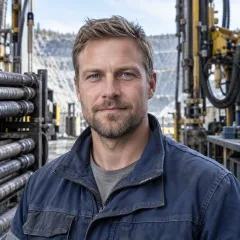
Soren Valgaard
Soren Valgaard covers surface and underground drill rigs, rotary drills, core drills, rock drills, DTH hammers, drill bits, and rock-reinforcement equipment. His evaluations reference ISO 18758-1 while comparing hole diameter, drilling depth, penetration rate, feed force, compressor demand, rod handling, fuel use, and rig stability. He helps mine engineers and equipment buyers match drilling systems to geology, bench design, production targets, operator safety, mobility, and maintenance conditions.